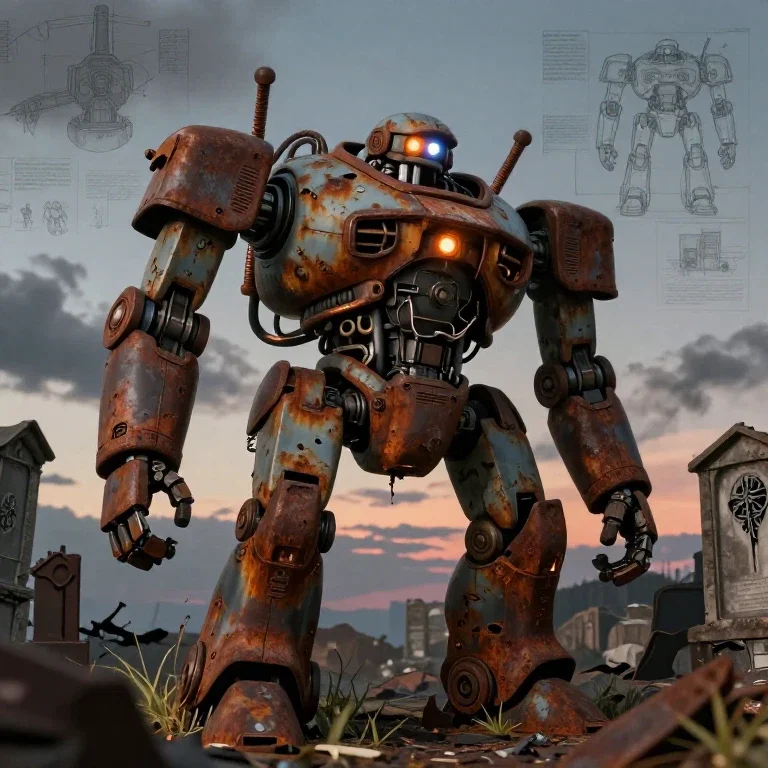
The graveyard of rusted robots. Expressing rust: Rust isn't just one color; mixing brown, reddish-brown, ochre, and dark gray will look natural. Adding thicker rust to the corners and seams will make it look more realistic. A sense of aging: Avoid perfectly straight lines, and add dents, cracks, chips, and exposed wiring. Furthermore, intertwining grass and ivy will enhance the feeling of long abandonment. Tips for backgrounds: To create a graveyard feel, don't make the ground just dirt — mix in parts with silhouettes like metal fragments, screws, and bones. Making the sky a sunset will look emotional, while a cloudy sky will give it an eerie vibe. Color composition: Tie the whole thing together with muted tones, and adding just one bright color will make the main subject stand out. For example, a robot with only one glowing eye makes a strong impression. Easy-to-use reference information: For reference materials on robots and post-apocalyptic background art, municipal exhibition documents include background art information such as robots from Laputa and ruined Laputa, which serve as hints for building a worldview. (city.takamatsu.kagawa.jp) Also, in critiques of background artworks, adding metallic textures and traces of everyday life is said to increase persuasiveness, making it easy to apply to expressions of rusted machinery. (cgworld.jp) Steampunk industrial fantasy blueprint of a bulky, low-tech dieselpunk mecha, rust and oil dripping, towering low-angle shot over shattered concrete ruins, thick exposed copper cables, welding lights and flames from the internal combustion engine, a steel-blue twilight atmosphere with clouds of steam, partially burnt vintage engineering prints