About the Itoigawa Fire
日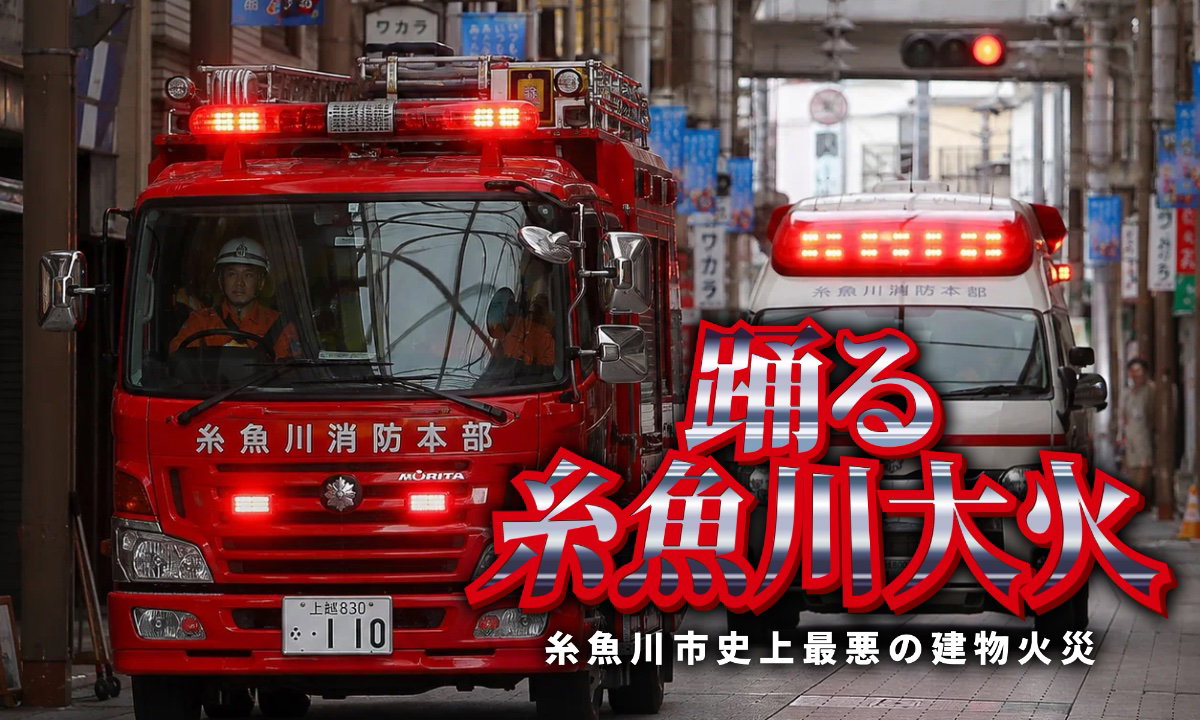 The Itoigawa Fire was a large-scale fire that occurred on December 22, 2016, in Itoigawa City, Niigata Prefecture, just before noon. It started due to a forgotten stove at a ramen shop, and fanned by fierce southern winds caused by the Foehn phenomenon, spot fires continued, resulting in the loss of 147 buildings (including homes and shops, with a burned area of approximately 40,000 square meters) before the fire was extinguished about 30 hours later. Date and time of outbreak: Around 10:20 a.m. on December 22, 2016. Date and time of extinguishment: Around 4:30 p.m. on December 23, 2016. Location of outbreak: A restaurant (ramen shop) in 1-chome, Omachi, Itoigawa City, Niigata Prefecture. Number of damaged buildings: 147 (120 completely burned, 5 half-burned, 22 partially burned). Burned area: Approximately 40,000 square meters. Casualties: No fatalities, 17 injured (including 15 firefighters).
A city fire that must not be forgotten
The fire that occurred in Itoigawa City at the end of last year was the largest urban fire since the Showa 51 (1976) fire in Sakata City, Yamagata Prefecture, excluding earthquake fires from the Great Hanshin-Awaji Earthquake and tsunami fires from the Great East Japan Earthquake. For this reason, many firefighting officials and fire experts believed that ordinary large urban fires had been overcome. Reasons include the spread of fire-resistant building materials, the advancement of urban fireproofing, and the increased firefighting capabilities of professional fire departments. However, the Itoigawa City fire demonstrated that if adverse conditions overlap—such as strong winds blowing through densely built areas of wooden structures and insufficient firefighting resources in the early stages—there is still a risk of large-scale urban fires occurring even today. Let us consider what the large-scale fire in Itoigawa City teaches us.
The fire broke out around 10:20 a.m. on December 22, 2016, from a two-story wooden ramen shop in a densely built urban area near JR Itoigawa Station. The owner placed a wok on the stove, forgot he had lit it, returned to his nearby home, and came back to the shop about 40 minutes later to find the fire. A fire extinguisher had been voluntarily installed in the kitchen, but the owner attempted initial firefighting with tap water instead of the extinguisher. However, the fire's intensity did not diminish, and it spread.
The Itoigawa Fire Department Headquarters became aware of the fire at 10:28 a.m. Seven minutes later, at 10:35 a.m., four vehicles including pumpers and tankers arrived at the scene, followed by the successive deployment of all 16 fire trucks owned by the Itoigawa City Fire Department Headquarters. Fire brigades also joined the firefighting effort afterward, but narrow alleyways and flames spreading to rooftops made firefighting extremely difficult.
The weather that day was cloudy turning to rain. Because a low-pressure system was developing and moving eastward over the Sea of Japan, strong winds persisted, and the Niigata Local Meteorological Observatory had issued a strong wind advisory. Fanned by strong southern winds, embers and burning pieces of wood flew, and the fire spread northward through the town. By around 11:30 a.m., about an hour after the outbreak, it had spread to areas over 100 meters away, and three hours later, it reached near the sea, about 300 meters away.
Judging that it was difficult to extinguish the fire with local firefighting resources alone, the Itoigawa City Fire Department Headquarters requested support at noon from neighboring fire departments, including Joetsu City and Niigata City. Ultimately, a total of 38 firefighting units from 19 fire departments—not only within the prefecture but also from Toyama Prefecture and Nagano Prefecture—rushed to the scene, and the fire was finally brought under control at around 8:50 p.m., over 10 hours after the outbreak.
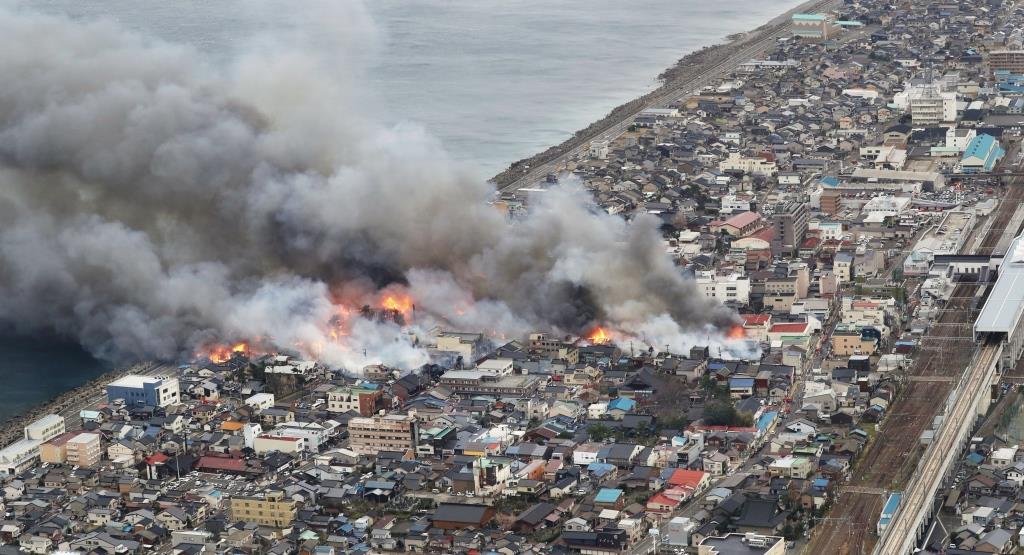
From the Itoigawa City website
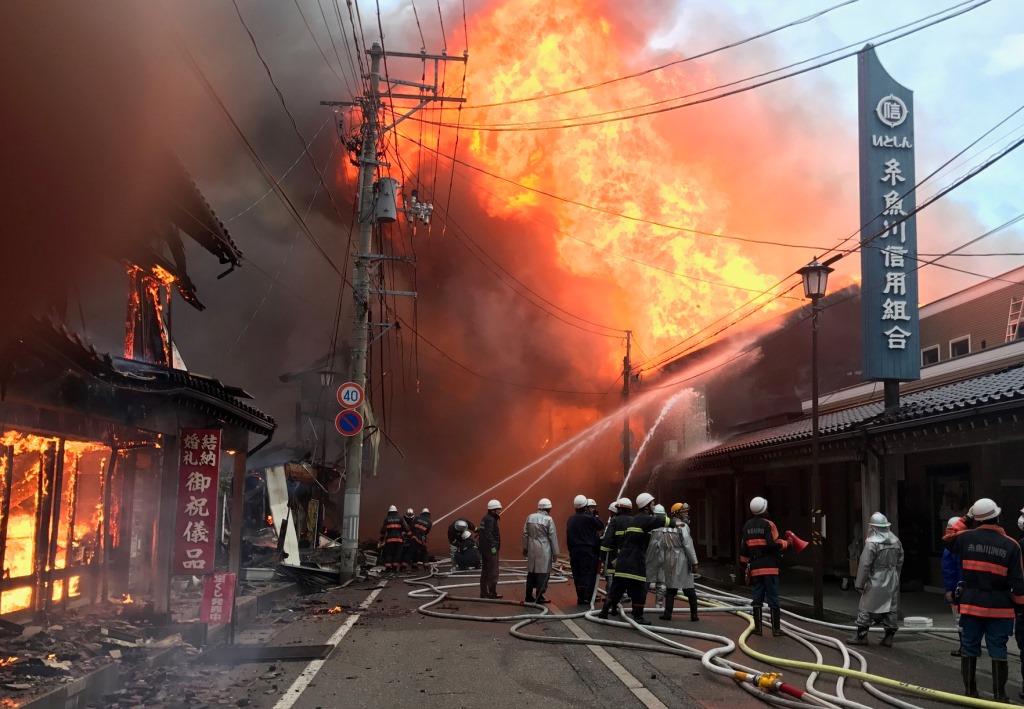
Go to the Itoigawa City website from here: https://www.city.itoigawa.lg.jp/page/2124.html